
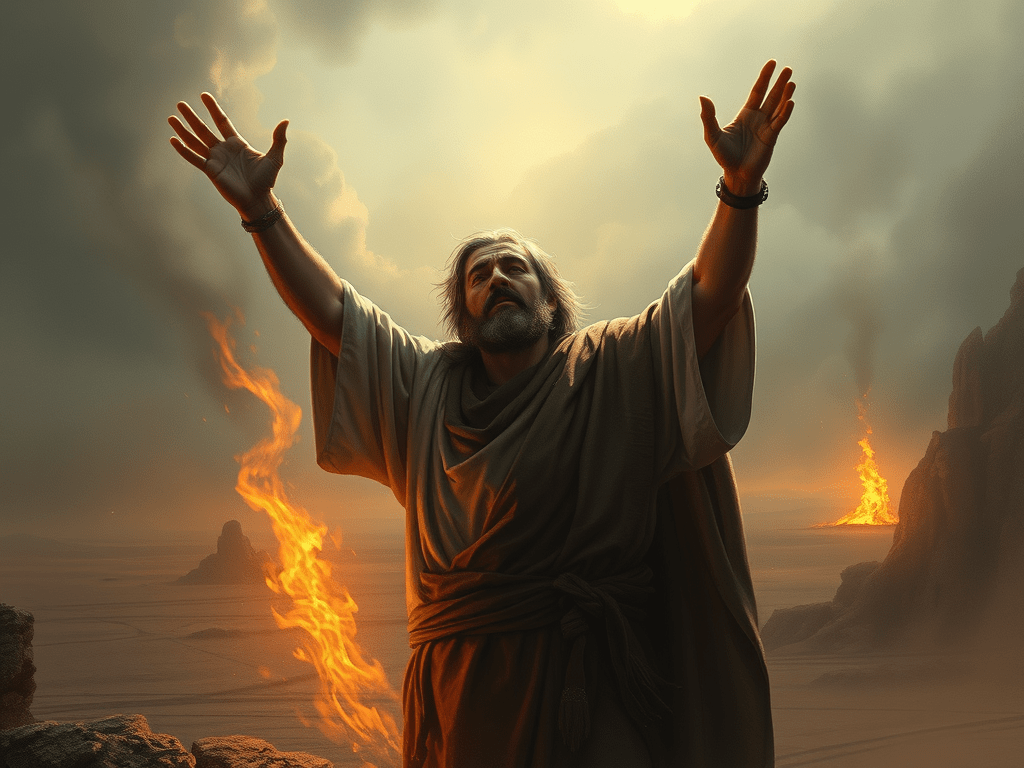
Jeremiah is often called the “weeping prophet,” not because he was emotionally expressive in his preaching, but because his ministry was marked by grief. He lived in a nation that had drifted steadily away from God. Idolatry had replaced worship. Political alliances had replaced trust in the Lord. The people chased surrounding nations while rejecting the One who had formed them. Jeremiah did not merely observe this decline; he carried it as a burden placed upon him by God Himself.
From the beginning, his calling was difficult. The Lord had set him apart before he was born and appointed him to speak to a rebellious people. He would preach warning and judgment, yet the people would not listen. Instead of repentance, he would face resistance. Instead of gratitude, he would endure ridicule. By the time we reach chapter 20, Jeremiah has been beaten and humiliated by a priest named Pashur, and the emotional weight of that calling begins to surface.
“O Lord, thou hast deceived me, and I was deceived: thou art stronger than I, and hast prevailed: I am in derision daily, every one mocketh me.”
— Jeremiah 20:7 (KJV)
Every time he spoke the Word of the Lord, opposition followed. Every act of obedience cost him something. The burden became so heavy that he reached a breaking point. He felt like God had called him to do something impossible.
The Temptation to Be Silent
In that moment of exhaustion, Jeremiah made a decision that many faithful people have quietly considered.
“Then I said, I will not make mention of him, nor speak any more in his name.”
— Jeremiah 20:9a (KJV)
He was not denying God. He was not renouncing truth. He was simply worn down. Silence felt safer. Silence felt easier. Silence seemed like self-preservation.
There are seasons when obedience feels costly and standing firm feels lonely. Speaking truth invites misunderstanding. Taking a stand invites criticism. The temptation is not always to abandon faith, but to quietly step back from boldness.
Jeremiah tried. But something deeper was at work within him.
When the Word Becomes Fire
Jeremiah could not remain silent because the Word of God was not merely information to him. It was not academic theology or professional responsibility. It was something else that was alive in him.
“But his word was in mine heart as a burning fire shut up in my bones, and I was weary with forbearing, and I could not stay.”
— Jeremiah 20:9b (KJV)
The Word had taken residence in his heart, and it burned there. He attempted to contain it, but it would not allow itself to be extinguished. He became weary from trying to hold it in. The word taking up residency in him was the fire of God and it needing to burn. Throughout Scripture, God reveals Himself in imagery of fire. He appeared to Moses in a burning bush. He led Israel through the wilderness as a pillar of fire. The writer of Hebrews reminds us:
“For our God is a consuming fire.”
— Hebrews 12:29 (KJV)
Fire transforms whatever it touches. It produces light in darkness. It consumes fuel. It changes the environment around it. The Word of God does the same. Malachi describes it as a refiner’s fire that purifies and cleanses. The psalmist declares:
“Thy word is a lamp unto my feet, and a light unto my path.”
— Psalm 119:105 (KJV)
When the Word of God is hidden in the heart, it does not remain dormant. It shapes the soul from within. And, it’s going to burn it’s way out.
The Danger of Covering the Flame
Jesus warned that light is not meant to be concealed.
“Ye are the light of the world. A city that is set on an hill cannot be hid.
Neither do men light a candle, and put it under a bushel, but on a candlestick; and it giveth light unto all that are in the house.”
— Matthew 5:14–15 (KJV)
A flame covered long enough will flicker and die. Deprived of oxygen, it cannot sustain itself. Spiritually, this same principle applies. If we suppress truth for comfort’s sake, if we avoid obedience to maintain peace, if we neglect the Word rather than hiding it in our hearts, the fire can grow dim.
Jeremiah discovered that suppressing the Word did not bring relief; it created inner unrest. He became weary trying to contain what God had placed inside him. The fire was not meant to be hidden. It was meant to burn.
Fear on Every Side
Jeremiah described his culture in a way that sounds strikingly familiar:
“For I heard the defaming of many, fear on every side…”
— Jeremiah 20:10 (KJV)
His world was marked by anxiety, hostility, and rebellion. Yet even in that environment, he anchored himself in a greater truth.
“But the Lord is with me as a mighty terrible one: therefore my persecutors shall stumble, and they shall not prevail.”
— Jeremiah 20:11 (KJV)
His confidence was not rooted in public approval or visible success. It rested in the presence of God. The Lord’s faithfulness did not remove hardship, but it sustained him through it.
Truth with Tears, Not Pride
Jeremiah also acknowledged that God was refining him in the process. The Lord “tryest the righteous” and sees the heart. It would have been possible for Jeremiah to preach judgment with bitterness or superiority, but God was shaping him even as He used him.
Truth without humility becomes harshness. Warning without compassion becomes pride. We do not speak of judgment because we enjoy being right. We speak because souls matter. The same Scriptures that warn of consequences also proclaim redemption through Jesus Christ.
The psalmist reminds us:
“Thy word have I hid in mine heart, that I might not sin against thee.”
— Psalm 119:11 (KJV)
When the Word truly dwells within, it produces conviction in us before it ever flows through us.
What Are You Doing with the Fire?
The question becomes personal. What are we doing with the Word God has placed within us? Is it hidden in our hearts? Is it shaping our speech, our decisions, our compassion, and our courage? Or have we quietly placed a covering over it?
Jeremiah tried silence, but the fire would not permit it. Had he succeeded in extinguishing it, despair would have overtaken him. Later in the chapter he laments the day of his birth, revealing how fragile he felt. Without the sustaining fire of God’s Word, discouragement would have consumed him completely.
Perhaps the pressures of life have caused the flame to flicker. Fatigue, fear, disappointment, or distraction may have tempted you toward quiet retreat. The answer is not manufactured emotion. It is renewed surrender. Return to the Word. Hide it in your heart. Ask the Lord to breathe upon it again.
When the Word of God truly takes hold, there comes a point where silence is no longer an option. Like Jeremiah, we find ourselves compelled—not by personality, not by pride, but by a holy fire that refuses to be extinguished.
Sermon Preached on February 1, 2026.
 Jeremy Kamer Ministries